
Publications

Sites & infrastructures
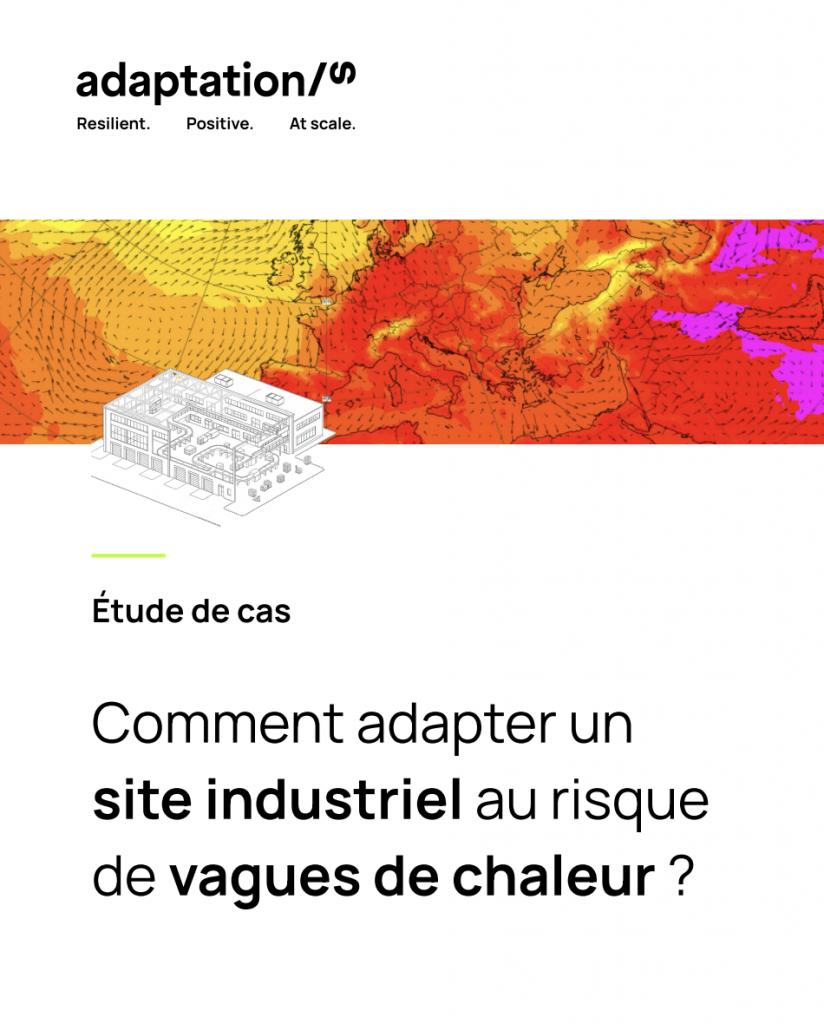
White paper on adapting industrial sites to heat waves
Heat waves are no longer a cyclical risk, but a systemic and growing threat to the industrial sector. Built for yesterday’s climate, many production sites are now proving vulnerable, suffering production stoppages, equipment failures, and increased health risks for employees.
This white paper proposes methodological approaches and courses of action for analyzing the exposure and vulnerability of an industrial site, simulating impacts, and deploying an effective and resilient adaptation program.
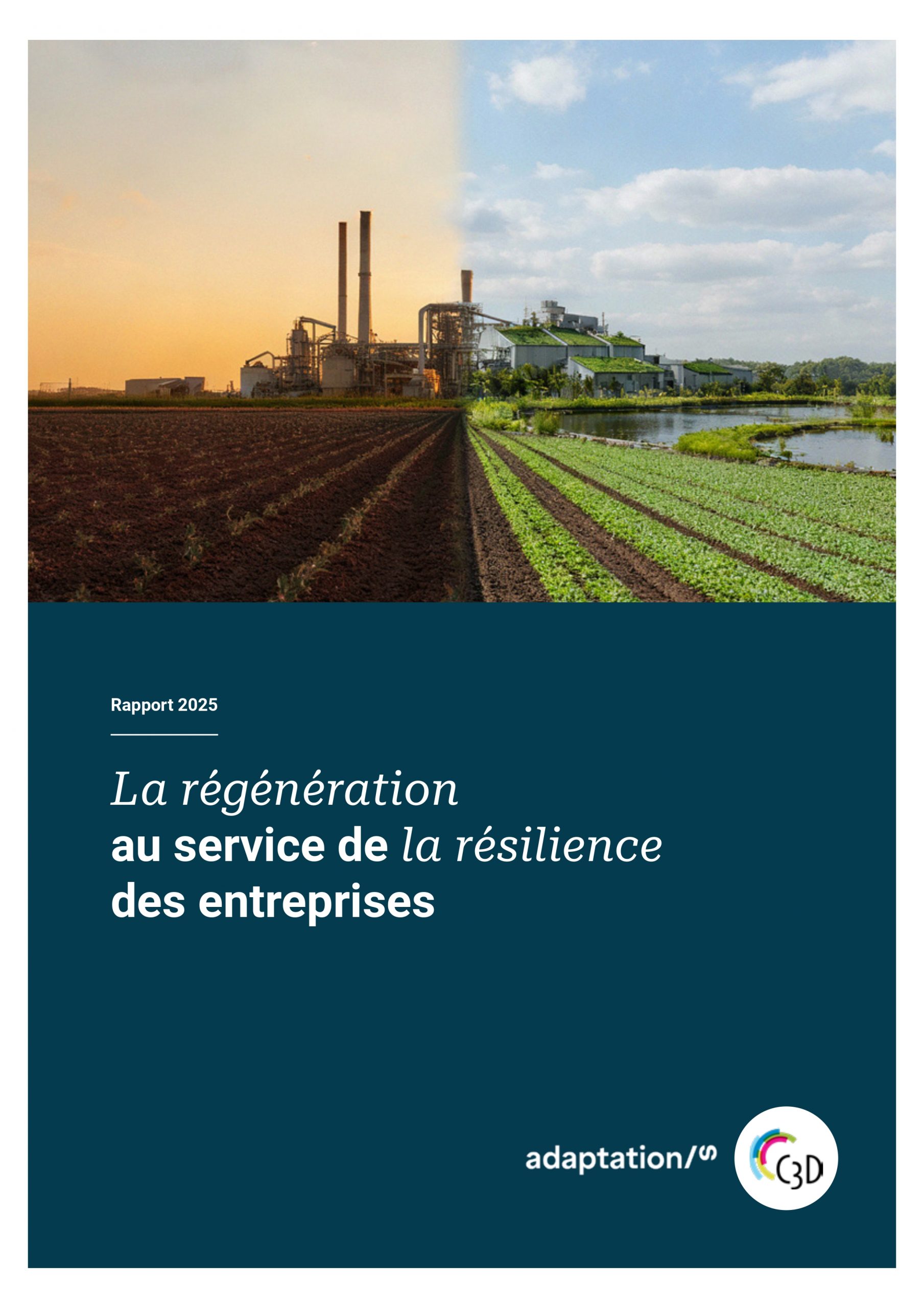
Regeneration for business resilience
by Maud Mielvaque et Maximilien Rouer, C3D and adaptation/s, 2025
The report highlights that nature regeneration is a powerful lever for mitigating negative environmental impacts and resilient adaptation for businesses, securing supplies and reducing risks. Concrete examples from C3D member companies illustrate the application of regenerative agricultural practices and Nature-based Solutions (NbS), whether individual, hybrid, or collective. In conclusion, the report emphasizes the need for a drastic reduction in fossil fuel consumption to make any regenerative approach truly effective.
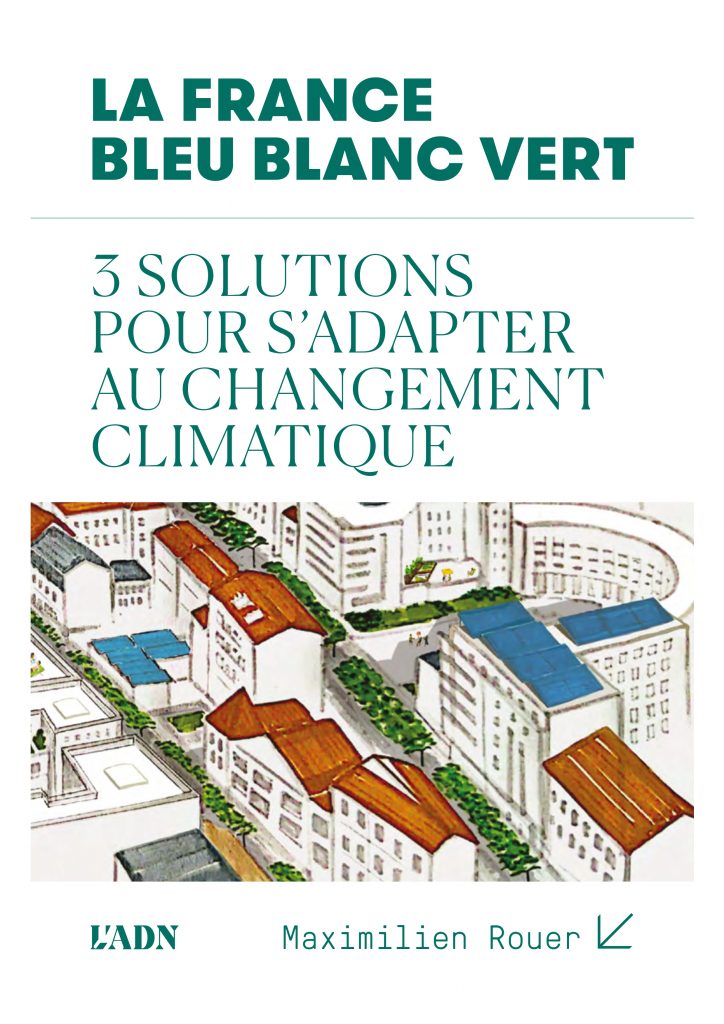
Blue white green France
by Maximilien Rouer, l’ADN edition, 2024
One of the few books in French discussing how territories can adapt to climate change, with an original angle: how can human, urban, and agricultural activities be protected? Complemented by 20 interviews with experts and companies, several existing, robust, and proven “umbrella” solutions are presented to help France adapt to climate change by 2050: agrivoltaic shade structures, hillside reservoirs, and agroforestry for rural areas; photovoltaic shade structures, cool roofing, and plant-based shade structures for cities. The book highlights the urgent need to review economic priorities in order to preserve life and activities.
Farmers set out to reconquer the world
by Hubert Garaud et Maximilien Rouer, JC Lattès edition, 2016
The book advocates a “triple revolution in consciousness” for French agriculture: changing the relationship with consumers by selling solutions rather than raw materials, transforming production conditions by adopting ecologically intensive agriculture (nowadays referred to as regenerative agriculture), and rebalancing the relationships between farmers, processors, and distributors. The aim is to regain food self-sufficiency, create value and jobs, and effectively combat climate change, making farmers the “saviors of humanity.”
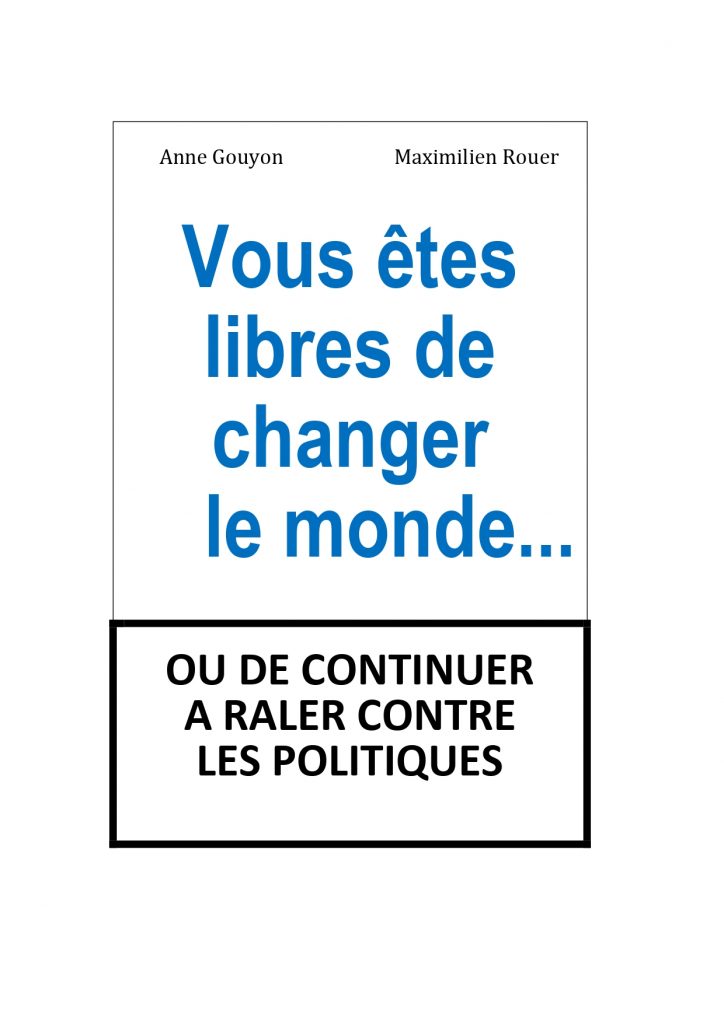
You are free to change the world
by Anne Gouyon et Maximilien Rouer, 2014
A book that encourages readers to overcome their fears and conditioning in order to transform society. It offers a threefold journey: through the testimonies of “world changers,” an exploration of the psychological mechanisms of action, and a personal journey structured around the four seasons of change (awakening, transgressing, enjoying, recruiting). The book highlights the importance of listening to emotions, mindfulness, creativity, co-construction, and commitment through action to build a sustainable and inclusive future. It denounces the obstacles of pyramidal society and linear thinking, and advocates for an education that nurtures freedom, cooperation, and respect for life.
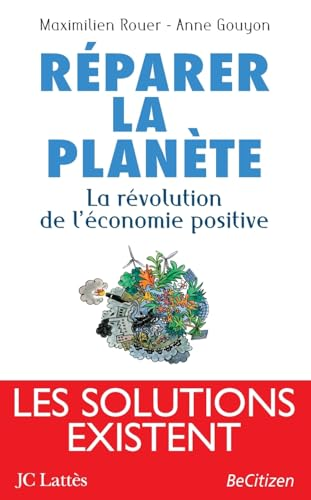
Repair the planet
by Anne Gouyon et Maximilien Rouer, JC Lattès edition, 2007
This pioneering book lays the foundations for a so-called positive economy (today we would call it regenerative), because it repairs the environment. It uses examples to illustrate how any activity could store carbon, regenerate biodiversity, clean up air, water and soil pollution, and produce resources. Through 40 examples of what we would now call start-ups, it demonstrates that this positive economy is possible. It also provides the results of modeling GHG concentrations if this positive economy were to become widespread: a return to a stable climate around 2100, with CO2 concentrations returning to 280 ppm.
News
Want to learn more about your adaptation journey?
Secure your assets against climate risks, contact our experts for a personalized assessment, and join the community of organizations preparing for climate change.